
Sekhmet and Neff
Here, kitty kitty kitty...

A little over a hundred years ago, between the end of the first World War and the stock market crash of 1929, Trent’s great-grandparents traveled to Europe and collected art and antiquities. Most of their collection was liquidated and sold many decades ago, but a few items have passed down to us, including this little bronze figurine of the Egyptian goddess Sekhmet, who was a lion-headed goddess of war, pestilence, healing, and sacred delirium*:
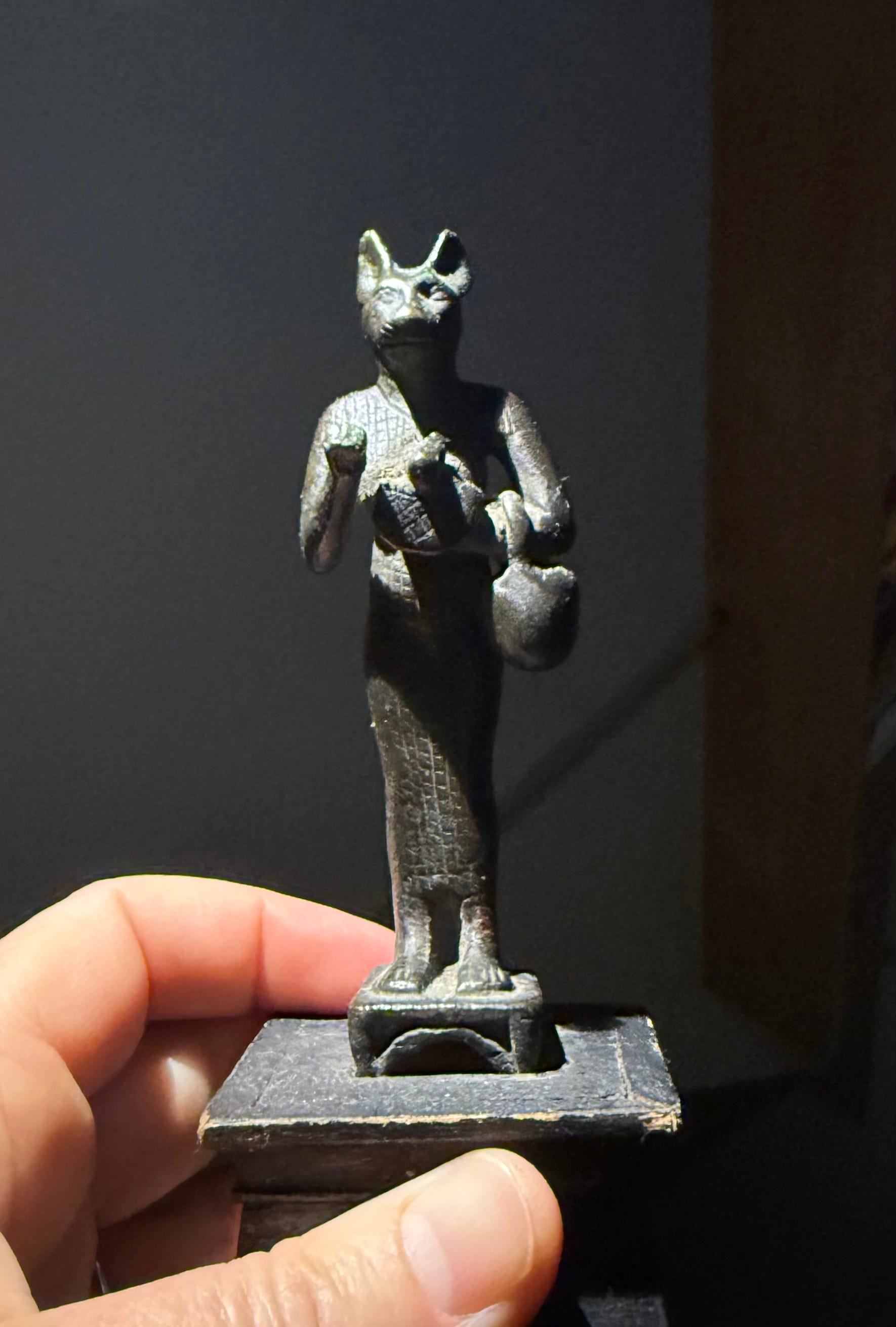
Note she is carrying a basket and holding the kitten Nefertem on her tummy. She had something in her other hand that has long since perished away, but appears to have been made from a different metal. What’s in the basket?
I received it probably 20 years ago now. I don’t have the proper provenance papers, but it appears genuine, and is perhaps around 3000 years old. Holding something that age is trippy. It is hard to wrap your mind around that amount of time. So much has happened just in the 52 years I’ve been alive, and this statuette is around 60 times my age.
A couple of years ago I decided, in my chaos-magicky way, to start lighting incense for the figurine. I wasn’t being particularly sacred about it. I wasn’t worshipping. I didn’t have any goal in mind. I just like a good excuse to light incense, and I had developed an ADHD minor obsession researching and learning about the original incense resins like frankincense and benzoin. So I purchased the resins, bought a couple of hinky little brass burners and some charcoal discs, started a semi-casual practice of lighting incense in front of Sekhmet at my little outdoor “altar” (a stepstool in front of a willow tree in the back yard), and enjoyed the fragrance. I figured it had probably been at least a thousand years since anyone had done this for this figurine, and it seemed like a fun thing to do.
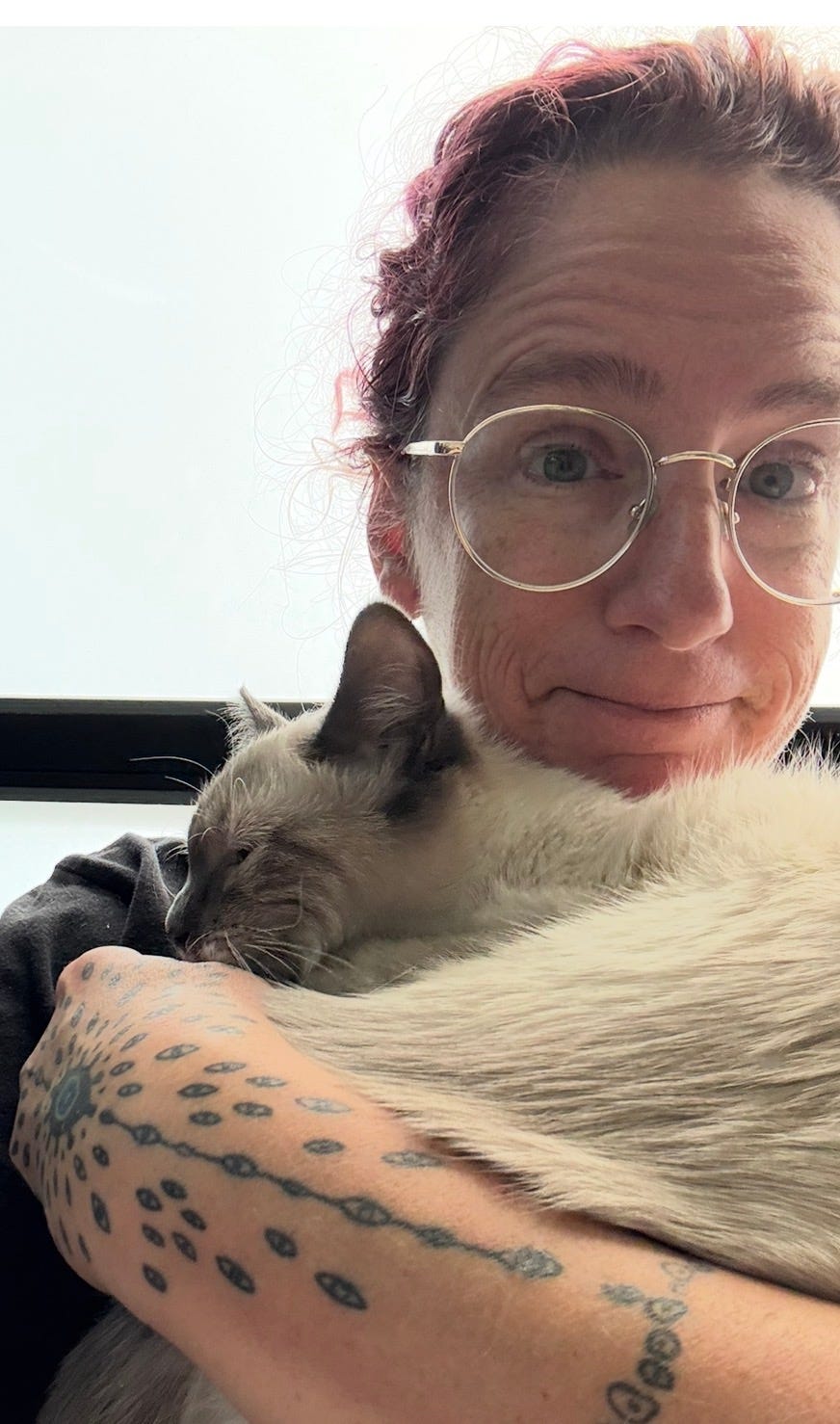
About nine months later, a kitten turned up. A half-starved little mite, but very friendly, and very fancy. He appeared to be a “snowshoe” cat—a siamese with white tippy toes and an elegant white mustache. We looked for lost cat notices all through the neighborhood and online, but nobody was looking for him. I named him Neff, after Nefertem, Sekhmet’s son who was the god of early morning light (I found Neff just before dawn on the back porch) and also the god of incense, perfume, and the sacred blue lotus. Seemed appropriate. Neff is, as an arch cat-person friend of mine puts it, “a lover.” He mugs me every day, sitting on my chest and purring and headbutting me into submission.
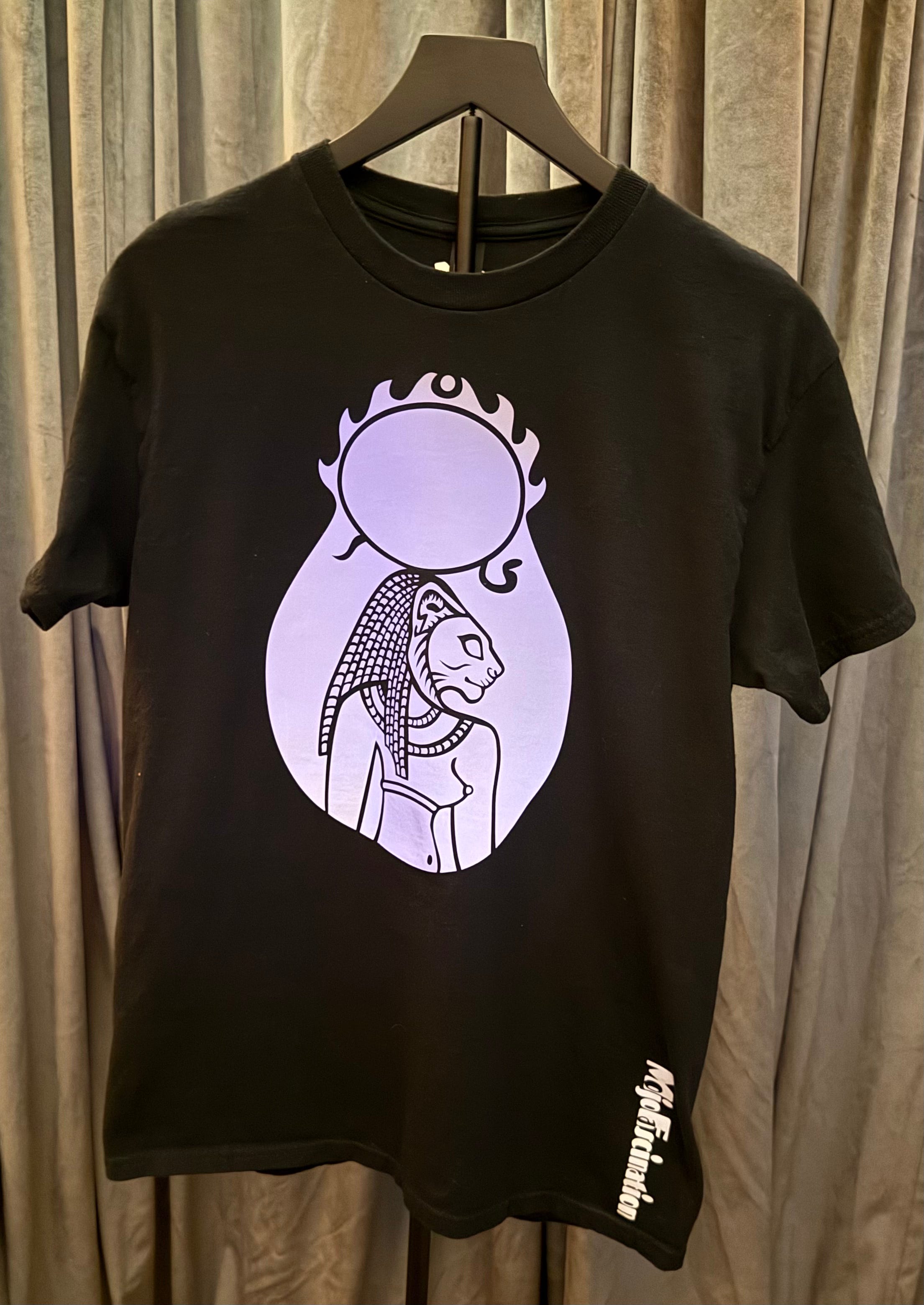
In homage to this cute little chain of events, I made a Sekhmet shirt design. I’ve only pressed up a few items with her on them, so you’ll have to be lucky to find one you like in your size…
*Yes, Sekhmet was goddess of all those things. Her main myth runs thus: At some point in the Times Of Legend, Ra, the sun god, got fed up with humans. We were noisy, we were careless, we were sacrilegious, and we were vermin to be gotten rid of. To this end, he enrolled Sekhmet to exterminate us. She agreed to be the agent of our destruction and set about the task. As humans perished en masse and the world went up in flames, the other gods came to Ra and said “Hey, did you really think this through? Without humans, who’s going to worship us?” And Ra said “Oh shit, I guess we’d better stop Sekhmet,” but it was too late. The goddess was so crazed with bloodlust that she couldn’t be called off. The gods came up with a cunning plan, though—they filled a lake with beer and dyed it blood-red, then called Sekhmet to drink up the “blood,” which she obligingly did. She got roaringly drunk, fell into a stupor, and was cured of her murderous delirium when she woke up. Humanity was saved, and every year Sekhmet was celebrated in a festival held on barges that sailed down the Nile, where priestesses and participants got drunk on beer and high on blue lotus wine and catcalled to the agricultural workers observing them from the riverbanks.